

Why US dollar falls against all major currencies Trump’s 50% Tariff and India’s Response:
Is the Dollar Really Losing Strength?
Thank you for reading this post, don't forget to subscribe!Introduction
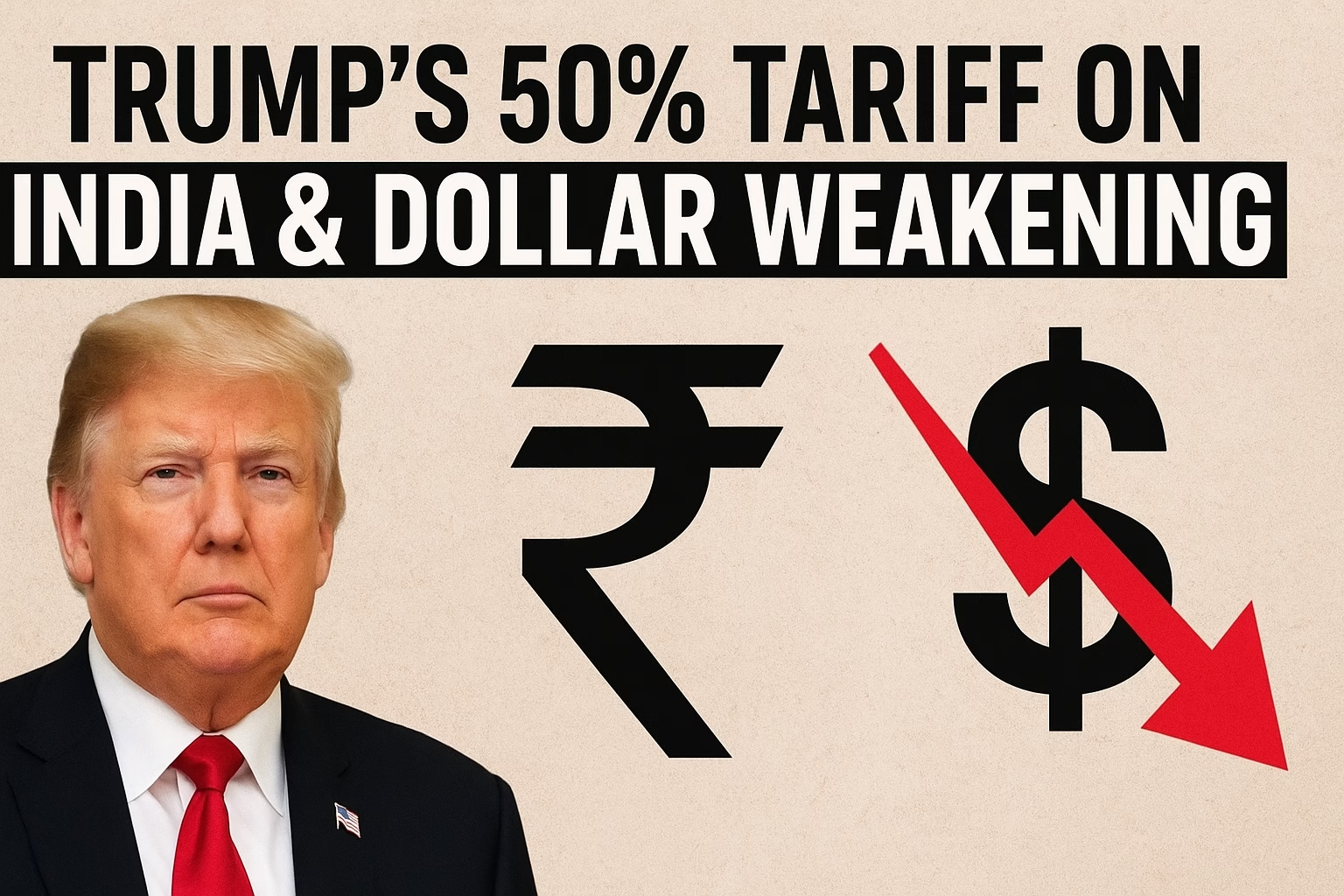
Trump’s 50% Tariff and India’s Response:
Hello friends 🙏, welcome to Static Study.
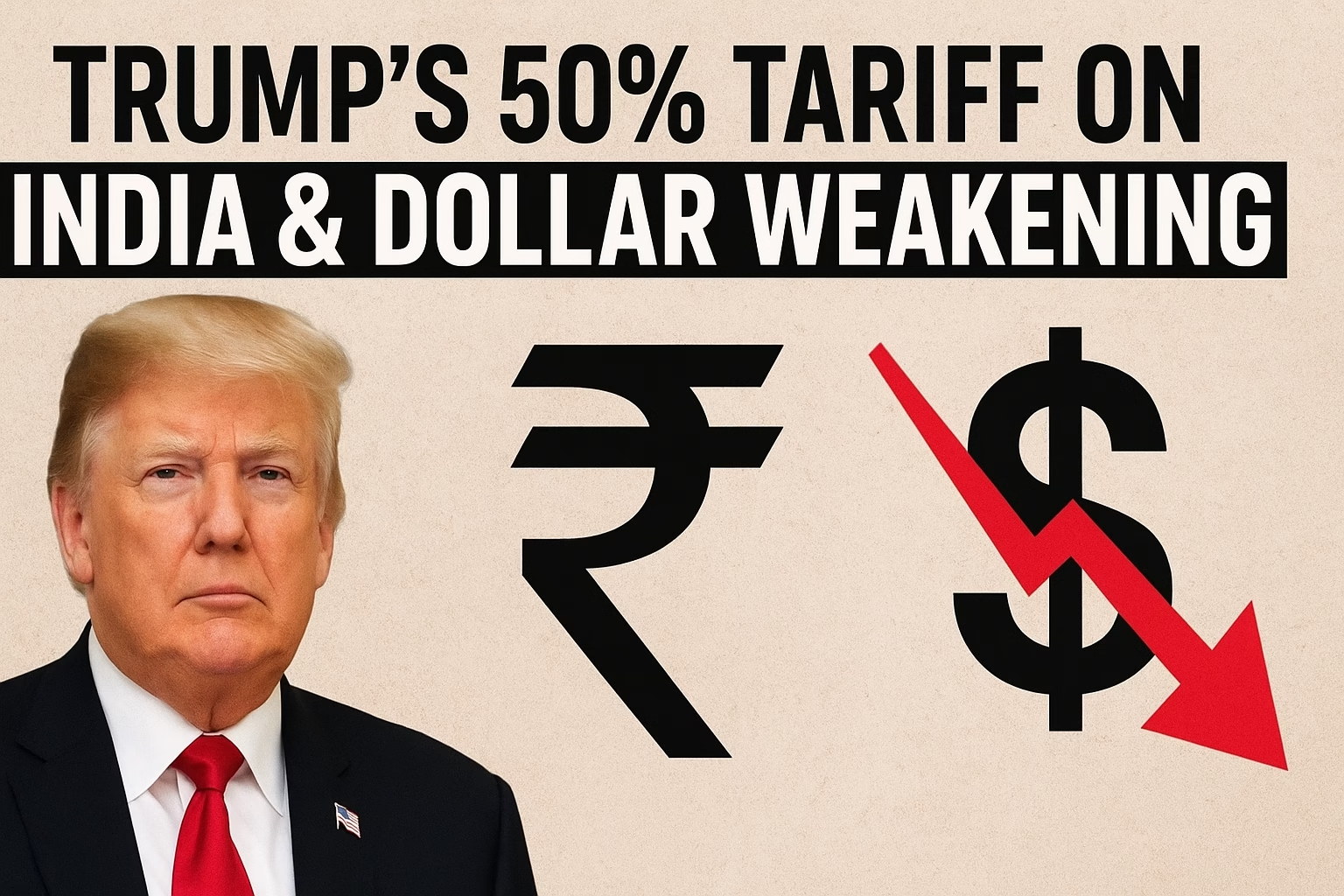
Recently, Donald Trump announced a 50% tariff on India. Earlier, the 25% tariff did not create such a deep impact because India had strong forex reserves. But now the story has changed.
This time, a straight 50% tariff has shaken up India-US trade relations. Naturally, everyone is asking:
- Will India’s economy be shaken?
- Will the rupee weaken or stay strong?
- And why is the US dollar losing its strength?
Let’s understand step by step.
RBI’s Role: A Signal of Confidence
When the tariff was imposed, everyone’s eyes were on the RBI (Reserve Bank of India).
Governor Sanjay Malhotra clearly stated:
- India is prepared for the long run.
- We have enough forex reserves to cover 11 months of exports.
- There’s no need to panic because RBI will not let the rupee collapse.
In fact, RBI directly intervened and kept the Indian rupee strong.
Dollar Weakness: What’s Happening Globally?
Interestingly, while the Indian rupee is stable, the US dollar is losing ground against many major currencies.
Currencies against which the dollar has weakened:
- Europe’s Euro
- Japan’s Yen
- Britain’s Pound
- Switzerland’s Swiss Franc
- Even Australian Dollar, New Zealand Dollar, and Canadian Dollar
👉 This is not just India’s win, but a global trend showing that the dollar’s shine is slowly fading.
Impact of 50% Tariff on India
Even though RBI is controlling the rupee, the tariff’s impact is visible.
Affected sectors:
- Textiles and garments
- Footwear and leather products
- Gemstones and jewelry
- Seafood exports
- Chemicals and agricultural products
According to SBI’s report, India’s trade surplus may turn into a trade deficit.
Threat to Jobs
When exports decline, the first impact will be on:
- Small businesses
- Textile factories and leather industries
- Fish and seafood processing units
Many reports suggest that millions of jobs are at risk.
Problems for America Too
Here’s the twist – the losses won’t just be for India.
Negative effects on the US:
- Tariffs will make products in the US market more expensive.
- Inflation could rise further.
- The common American consumer will face extra pressure.
So, even though Trump’s target is India, the arrow is also hurting the US economy.
Government and RBI’s Actions
India is not just defensive but has already taken several new steps.
RBI’s measures:
- Repo rate cuts to increase liquidity in the market.
- Policies to internationalize the rupee.
- Constantly selling dollars to keep the rupee strong.
Government’s measures:
- Relief in GST to boost consumption.
- Preparing a Diwali relief package to keep demand high.
- Diversification – reducing dependence on the US and boosting exports to markets like the UK, UAE, and Australia.
Future Possibilities
- If tariffs continue for long, India will need to build more international partnerships.
- The dollar’s continuous weakness could benefit economies like India.
- A combination of RBI and government strategies could make the rupee stronger.
Conclusion
Donald Trump’s 50% tariff has posed a new challenge for India. But this time, India is not panicking — it has stepped into the game with confidence.
- RBI has made it clear – the rupee won’t be allowed to crash.
- The government is diversifying export markets.
- And most importantly – the dollar itself is weakening.
So here’s the story, friends –
👉 The tariff may be tough, but India’s preparation and determination are tougher.
Jai Hind 🇮🇳